
Last updated November 2, 2026
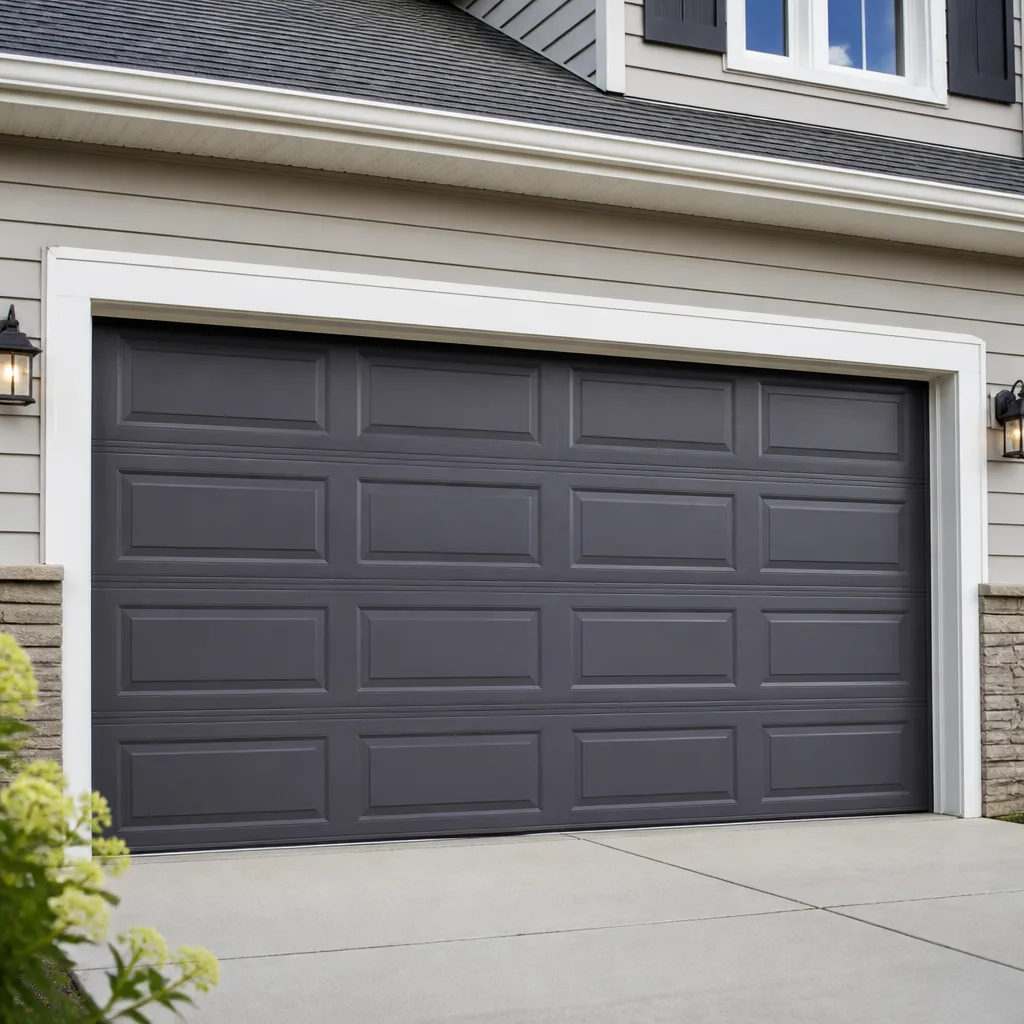 Raised-panel steel
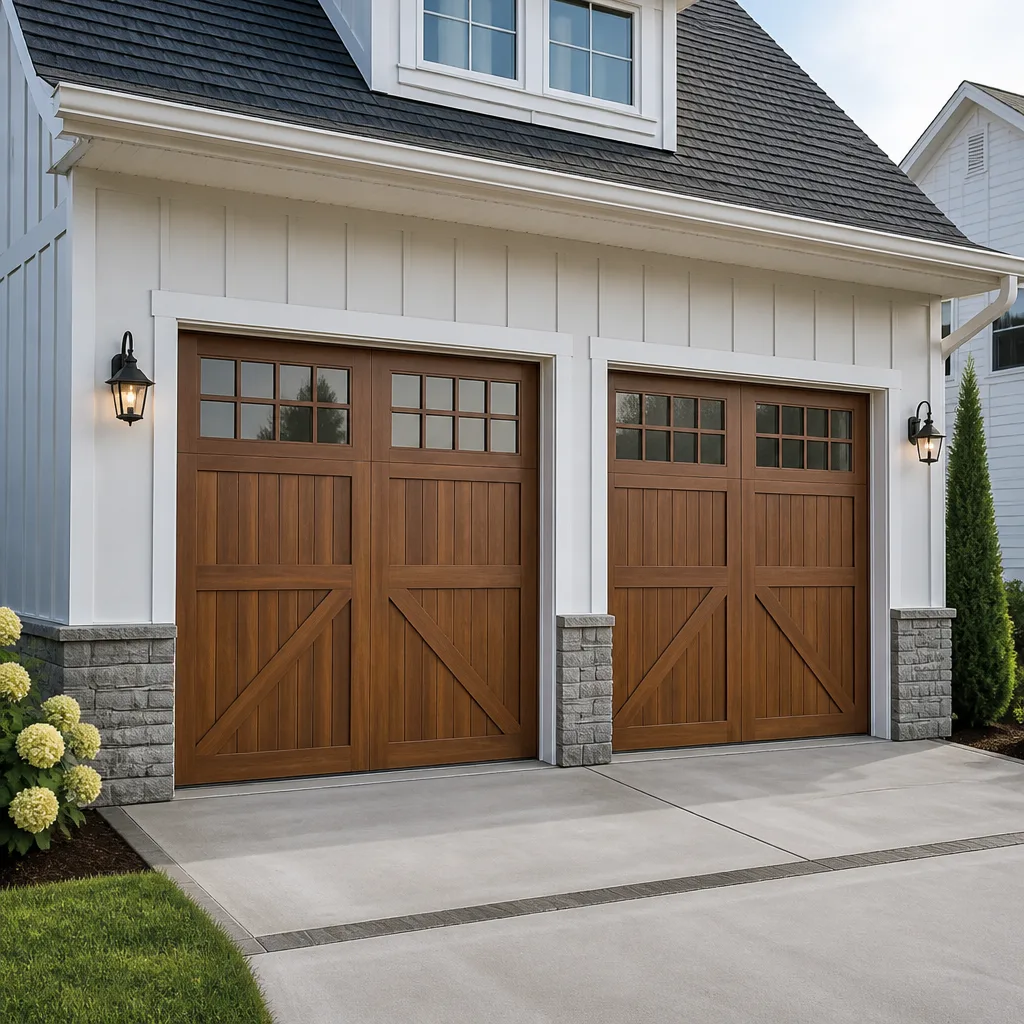 Carriage house
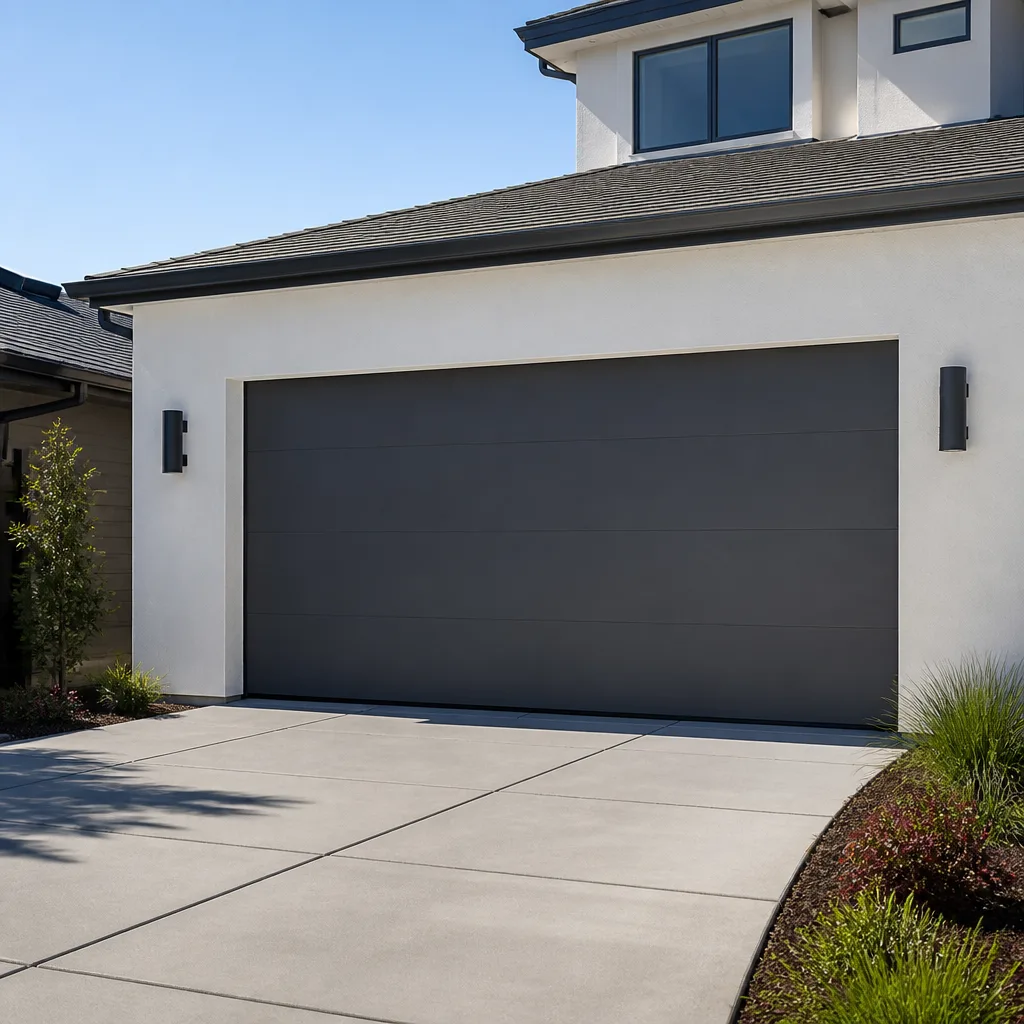 Modern flush
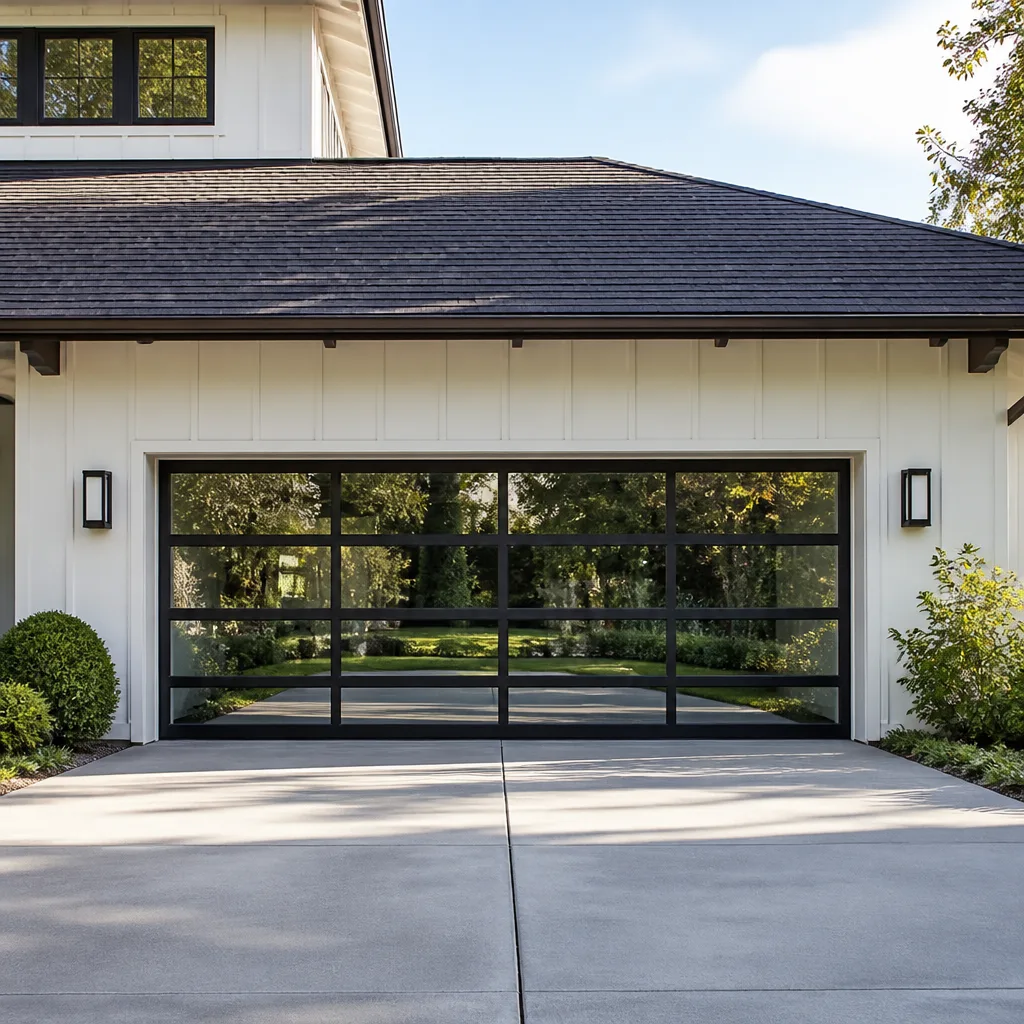 Full-view glass
 LiftMaster openers
 Chamberlain openers
Full 25-point door and opener safety check with every visit - springs, cables, rollers, tracks, and your LiftMaster or Chamberlain opener included
You get a price before we start. It does not change when the truck arrives.
Get your free estimateHow to Hire a Garage Door Contractor in Glendale: A Step-by-Step Guide
Most Glendale homeowners don’t realize that a garage door contractor who only services one opener brand, say LiftMaster or Genie, isn’t a specialist. They’re a brand representative. And the difference matters the moment your existing system, whatever name is stamped on the motor housing, starts grinding at 6:40 a.m. on a Tuesday. This guide – along with our Complete Garage Door Repair Guide for Glendale Homeowners – gives you the exact interview framework to separate a capable, brand-agnostic technician from a generalist guessing at the problem or a salesman angling for a full replacement. You’ll learn which three questions expose brand-lock instantly, what a California C-61/D28 license actually covers, how to spot a fake quote, and which warranty terms protect you when something fails in month four. By the end, you’ll know more about vetting a door contractor in Glendale than most people learn in a decade of homeownership.
Quick Answer
To hire a garage door contractor in Glendale, verify their California C-61/D28 limited specialty license on the CSLB database, confirm they service your existing opener brand rather than pushing a single manufacturer, require an on-site quote that includes spring type, door weight, and opener model, and get written clarity on parts versus labor versus manufacturer warranty coverage. A capable contractor answers these questions without hesitation. A brand-locked or parts-limited one deflects.
Styles & brands we work with
- Raised-panel steel
- Carriage house
- Modern flush
- Full-view glass
- LiftMaster openers
- Chamberlain openers
Table of Contents
- Step 1: Verify the California C-61/D28 License (Two Minutes, No Excuses)
- Step 2: The Three Questions That Expose a Brand-Locked Contractor
- Step 3: How to Tell a Real Quote From a Guess
- Step 4: Reading Reviews Like a Technician, Not a Customer
- Step 5: The Warranty Question Most Homeowners Forget
- Step 6: Glendale-Specific Factors: Climate, Code, and Market Realities
- Step 7: Red Flags That Should End the Conversation
Step 1: Verify the California C-61/D28 License (Two Minutes, No Excuses)
In California, garage door work falls under the C-61/D28 limited specialty classification, a specific contractor license for garage door installation, repair, and service. It’s not a general contractor license. It’s not a handyman exemption. It’s the exact credential that says this person has demonstrated competency in door systems, openers, springs, tracks, and the safety mechanisms that keep a 150-pound panel from coming down on your car or, worse, a family member.
Here’s the verification process, which takes under two minutes:
- Go to the Contractors State License Board website at cslb.ca.gov.
- Click “Check a License” and enter the contractor’s name or license number.
- Confirm the classification shows C-61/D28, not just a general B or another specialty.
- Check the license status is “Active” and note the issue and expiration dates.
- Look at the bond and workers’ compensation fields. A contractor doing door work in Glendale should have both.
Why does the D28 distinction matter here? Because a general contractor with a B license can legally pull permits and oversee projects, but their demonstrated specialty isn’t garage door mechanics. They may subcontract the actual door work to someone else, which means you’re paying a markup for a middleman and losing direct accountability. In our experience working across Glendale, from the hillside homes above the 2 Freeway to the flats near Glenoaks, we’ve seen homeowners hire a generalist who showed up, looked at a Wayne Dalton Torquemaster system, and had no idea how the internals worked. That’s a service fee paid for a diagnosis that never happened.
Also confirm insurance directly. The CSLB shows bond status, but ask for a certificate of insurance and confirm general liability coverage. If a technician drops a panel on your Tesla and the contractor has no insurance, you’re filing against your own homeowner’s policy. That’s a conversation no one wants with an adjuster.
This step alone eliminates roughly a third of the unqualified operators advertising garage door services online. The D28 license is the floor, not the ceiling, and every subsequent step in this guide builds on it. If you want to understand more about the repair process itself after you’ve hired someone, our Garage Door Repair in Glendale page walks through what a proper diagnosis and fix actually involves.
Step 2: The Three Questions That Expose a Brand-Locked Contractor
A garage door system has two mechanical halves: the door itself, which includes springs, tracks, rollers, and cables, and the opener, which is the motorized unit attached to the ceiling. The door and the opener are almost always different brands. Your door might be a Clopay while your opener is a Genie. Or an Amarr door with a Chamberlain motor. A contractor who only works on one opener brand – rather than helping you with choosing the right garage door brand for your needs – is telling you, without saying it directly, that they sell products, not repairs.
Ask these three questions during the initial phone call or first visit:
- “What brands of openers and doors do you service?” The answer should be immediate and plural. If the response is “all of them,” push for specifics. A capable contractor can name at least four or five brands without pausing. At Suncrest Garage Door Repair, we’re factory-familiar with eight: LiftMaster, Chamberlain, Genie, Clopay, Amarr, Wayne Dalton, Craftsman, and Raynor. That span matters because a Craftsman opener from 2003 has completely different internals than a LiftMaster with MyQ smart-home integration installed last year.
- “Do you repair openers or only replace them?” This question separates technicians from salespeople. A dedicated opener repair service means the contractor stocks logic boards, gear kits, limit switches, and carriage assemblies, not just remotes and safety sensors. If they can’t name a single opener internal component they’ve repaired, they’re an installer, not a repair technician. Your opener is a daily driver. You use it more than your front door most weeks. Treating it as disposable is how you end up paying $600 for a replacement when a $180 gear kit would have fixed the noise.
- “If I have a Raynor opener from 2000 and a Wayne Dalton door, can you diagnose both?” Substitute whatever brands are actually in your garage. The point is testing coverage across both the premium smart-opener segment and the value/legacy segment. A contractor who hesitates on legacy brands is signaling parts-sourcing limitations. Legacy systems need different parts streams, and many contractors won’t touch them because the margins are thinner and the diagnostics take longer. We work on the door you have, not the one we want to sell you, and that includes systems that outlived two real estate cycles.
Brand-agnostic coverage isn’t a marketing phrase. It’s the difference between a technician who diagnosed your actual system and a salesperson who identified your hardware as a replacement opportunity. For more on what opener-specific repair actually involves, see our Garage Door Opener Repair in Glendale page.
Step 3: How to Tell a Real Quote From a Guess
Here’s a scenario we see regularly: a Glendale homeowner calls a contractor, describes the problem as “garage door won’t open,” and gets a phone estimate of $250 to $350. The technician hasn’t seen the door. Hasn’t opened the emergency release. Doesn’t know if it’s a torsion spring or extension spring system. Doesn’t know the door weight, the opener model, or whether the issue is mechanical or electrical. That’s not a quote. That’s a guess with a service fee attached to it.
A legitimate quote requires an on-site visit and at minimum the following data points:
- Spring type and size: Torsion springs are measured by wire gauge, inside diameter, and length. Extension springs are measured by length and stretch. A contractor who can’t identify which system you have, and can’t tell you the spring dimensions from the existing hardware, hasn’t done the diagnostic work.
- Door weight: Garage doors range from roughly 130 pounds for a single aluminum panel to over 400 pounds for a double-wide insulated steel door. Any spring replacement must be matched to the actual weight. A tech who doesn’t weigh or estimate the door is guessing at spring tension, and a wrong spring either fails early or overloads the opener motor.
- Opener model and drive type: Chain drive, belt drive, screw drive, wall-mount jackshaft. Each has different failure modes and repair costs. A quote that doesn’t reference the opener model is a quote that hasn’t looked at half the system.
- Track condition and hardware: Bent tracks, worn rollers, rusted hinges, stretched cables. These components wear at different rates depending on usage and Glendale’s dry heat, which accelerates plastic and rubber degradation.
A written quote should itemize parts and labor separately, and it should state explicitly that the price is quoted and agreed before any work starts. That’s not a courtesy. That’s the baseline for a professional transaction. If a contractor refuses to put numbers on paper or gives a range so wide it’s meaningless (“between $200 and $800 depending”), walk away. A professional diagnosis narrows the range to a specific figure, not a slot machine.
Also watch for the “door tune-up” upsell. Some contractors quote a low spring replacement price and then add $80 for “roller lubrication,” $60 for “hinge tightening,” and $90 for “track alignment.” Some of those items are legitimate if the hardware actually needs them. But if the add-ons appear after the quote was agreed, that’s not maintenance. That’s quote creep. Every additional cost should be explained, justified by visible wear, and approved by you before the work proceeds.
Step 4: Reading Reviews Like a Technician, Not a Customer
Online reviews for garage door contractors in Glendale follow a pattern that’s easy to decode once you know what to look for. Five-star reviews that say “great service, friendly tech” tell you nothing about technical competence. They tell you the technician was polite and showed up on time. Valuable reviews contain specific nouns.
When you scan a contractor’s review profile, look for these phrases and details:
- Specific components named: “replaced my torsion spring” or “fixed the logic board on my LiftMaster” or “rewound the Torquemaster spring.” A reviewer who can name the part understands what was done. A reviewer who says “fixed the door” might have had a cable reattached or a full opener replacement. You can’t tell.
- Diagnostic transparency mentioned: Reviews that say “he showed me the broken spring and explained why it failed” indicate a contractor who works visibly. Garage door work happens in your garage, with you watching. Opaque work is a red flag.
- Parts availability referenced: “He had the spring on the truck and finished in an hour” versus “had to order parts and come back next week.” Same-day repair happens when a contractor stocks common components. If a contractor’s reviews consistently mention return visits and parts delays, that’s a parts-limited operation.
- Price matching the quote: Reviews that mention “paid exactly what he quoted” signal honest quoting practices. Reviews that mention surprise charges or “ended up costing more” are warnings.
Then there’s the five-star prompt pattern, which is easy to spot once you know it exists. Some companies run review-generation campaigns where customers get a discount or freebie for leaving a review. The reviews come in clusters, use similar language, and lack technical specificity. Ten reviews in one week that all say “great experience, professional, would recommend” with no mechanical details is a review-prompt farm, not a track record. Genuine technical work generates reviews with nouns: spring, opener, track, cable, roller, remote.
For Glendale specifically, watch for reviews that mention steep driveways or hillside garage configurations. Homes in the Adams Hill and Rossmoyne areas often have garages at grade or below street level, which complicates vehicle access and panel removal. A contractor with positive reviews from hillside jobs has handled the awkward logistics that flat-land operations never face. A contractor with only flat suburban reviews may struggle with your 35-degree driveway.
Step 5: The Warranty Question Most Homeowners Forget
Month four. The new spring you paid for starts squeaking, or the opener logic board fails, or a roller seizes. You call the contractor. What happens next depends entirely on the warranty structure, and most homeowners never asked the question that determines the outcome.
There are three separate warranty layers, and they cover different things:
- Parts warranty: The spring, roller, opener motor, logic board, or cable carries a manufacturer warranty. Torsion springs typically carry 10,000 to 20,000 cycle ratings, which translates to roughly 5 to 10 years of normal use. A premium spring with a 30,000-cycle rating costs more up front but outlasts two budget springs. Ask what spring cycle rating you’re being quoted and what the part warranty actually covers.
- Labor warranty: The contractor’s workmanship guarantee. If a spring fails at month four because it was installed incorrectly, the labor warranty covers the reinstallation. If it fails because a 10,000-cycle spring was installed in a high-usage household, that’s a spec problem, not a workmanship problem. The labor warranty is usually 30 days to one year from the contractor. Whatever it is, get it written on the invoice.
- Manufacturer warranty: Separate from the contractor entirely. If your LiftMaster opener fails at month six under its own manufacturer warranty, the part is covered. But the labor to remove, replace, and reprogram the unit is almost never covered by the manufacturer. Some premium openers carry longer warranties, but the labor-hour costs land on you.
The question to ask before hiring: “If this part fails in four months, what do I pay and what do you cover?” A contractor who immediately separates parts from labor and gives you a specific answer understands warranty mechanics. A contractor who says “don’t worry, we guarantee everything” is either overpromising or planning to disappear.
For opener work especially, ask about the relationship between the repair warranty and the opener’s age. A 15-year-old Genie opener repaired with a new gear kit might carry a 90-day parts warranty on the gear kit, but no warranty on the motor, which is also 15 years old and may fail next month. A capable contractor tells you this before you spend. A salesperson waits until after the second service call to suggest a replacement. Repair first, replace only when it makes sense.
Step 6: Glendale-Specific Factors: Climate, Code, and Market Realities
Garage door systems in Glendale live in a specific environment, and that environment shapes failures in predictable ways – something we cover in depth in our Seasonal Garage Door Care for Glendale: Year-Round Homeowner’s Guide. The dry heat and intense summer sun, regularly pushing past 90 degrees from June through September, degrade rubber seals, plastic gears, and nylon rollers faster than coastal humidity does. A door facing south or west on a street like Balboa or Central absorbs direct afternoon sun, which heats the metal panels and accelerates seal deterioration. Wood doors in the older neighborhoods near Brand Park or Rossmoyne need more frequent painting and hinge maintenance than steel doors do.
Here’s what the local climate means for hiring decisions:
- Spring life: Glendale’s temperature swings between hot days and cool nights stress torsion springs through repeated expansion and contraction cycles. If a contractor can’t tell you the spring cycle rating they’re installing, they’re installing budget components that will fail sooner in this climate.
- Opener electronics: Heat kills capacitors and logic boards. An opener in an uninsulated Glendale garage, which is most garages in this city, operates in ambient temperatures that push 110 degrees on summer afternoons. That’s not an extreme scenario. It’s a seasonal reality. Contractors who understand local climate factor heat-death into their diagnostic assumptions.
- Wood door maintenance: The older craftsman and Spanish-style homes in neighborhoods like Rossmoyne and El Miradero often have original wood doors. Those doors need seasonal inspection because dry heat cracks panels and separations admit dust and heat. A contractor who works on wood doors, not just steel, is worth identifying.
Code compliance matters too. Glendale enforces California Building Code for garage door installations, including wind-load requirements for hillside exposures and fire-rated door requirements for attached garages. A D28-licensed contractor knows these requirements. An unlicensed operator doesn’t, and their installation may fail a future home inspection when you sell.
If the decision tree leads to replacement rather than repair, our Garage Door Installation in Glendale page covers the selection and installation process in depth.
Step 7: Red Flags That Should End the Conversation
Throughout this guide, you’ll have collected signals about a contractor’s competence, coverage, and honesty. Here’s a condensed list of deal-breakers. If you encounter two or more, end the call and move to the next name on your list.
- No D28 license, or a license number that doesn’t verify on CSLB. Non-negotiable. If the state hasn’t certified them, they don’t work on your door.
- Phone quote before anyone has seen the door. A real quote requires eyes on the hardware. Phone estimates without inspection are sales openers.
- Brand-locked language. “We only install Genie” or “we don’t work on Craftsman” means you’re paying for their product line, not their diagnosis of your system.
- No opener repair service. A contractor who only installs openers but doesn’t repair them is a sales channel. Motorized openers are half the system; a capable contractor repairs both halves.
- Vague warranty language or refusal to put terms in writing. If the warranty isn’t written, it doesn’t exist. Verbal promises expire the moment the invoice is paid.
- Pressure to replace rather than repair. A $40 sensor replacement solves the problem, but the contractor wants you to buy a $700 opener. Honest contractors fix what’s broken and tell you when replacement genuinely makes sense.
- No insurance certificate available on request. If the certificate can’t be produced during the hiring conversation, it cannot be produced after an accident.
Common Mistakes to Avoid
- Hiring on price alone. The cheapest quote in Glendale often comes from an unlicensed operator or a contractor installing budget springs with low cycle ratings. A $90 spring replacement that fails in 18 months costs more than a $180 spring replacement that lasts seven years.
- Skipping the license check. Homeowners routinely skip CSLB verification because it feels bureaucratic. Two minutes of database search saves you from hiring someone the state has already disciplined or suspended.
- Accepting a phone estimate without an inspection. No one can diagnose a garage door problem from a verbal description. A phone quote means the technician is pricing a guess, and you’ll pay for the correction later.
- Not asking about brand coverage. If you have a Raynor opener and the contractor only works on LiftMaster and Chamberlain, you’ve hired someone who will recommend a replacement because they can’t repair your unit. That’s a $600 solution to a $150 problem.
- Overlooking the parts versus labor warranty distinction. A “lifetime warranty” on parts means nothing if the labor to install the replacement part costs $250 per visit. Get both warranties in writing, with dollar figures attached.
- Ignoring local climate factors. A contractor from the Valley may not understand how Glendale’s hillside temperatures and sun exposure shorten component life. Local experience shapes accurate diagnoses and honest lifespan predictions.
- Not reading the one-star reviews. The five-star reviews tell you what the contractor does well. The one-star reviews tell you what they do badly when things go wrong. Read both ends of the distribution, not the average.
See the difference
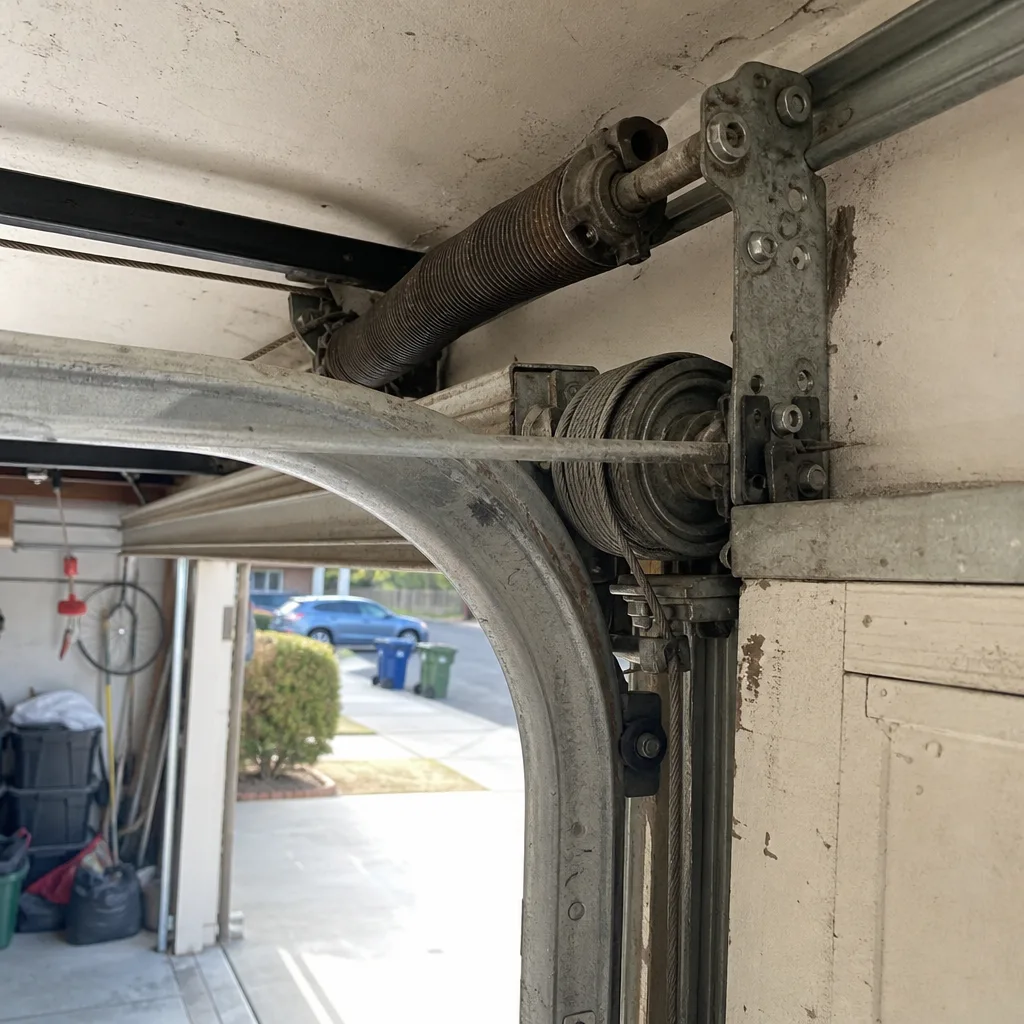 Before
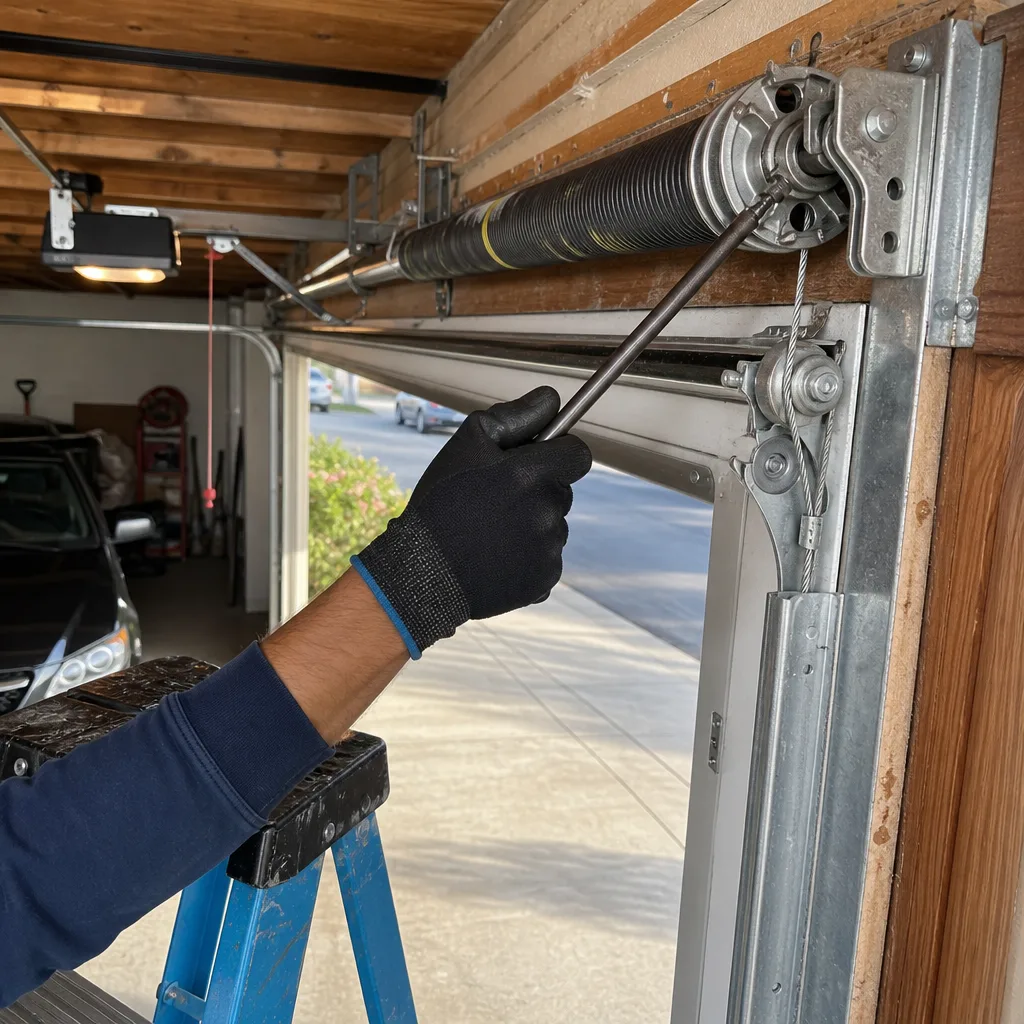 After
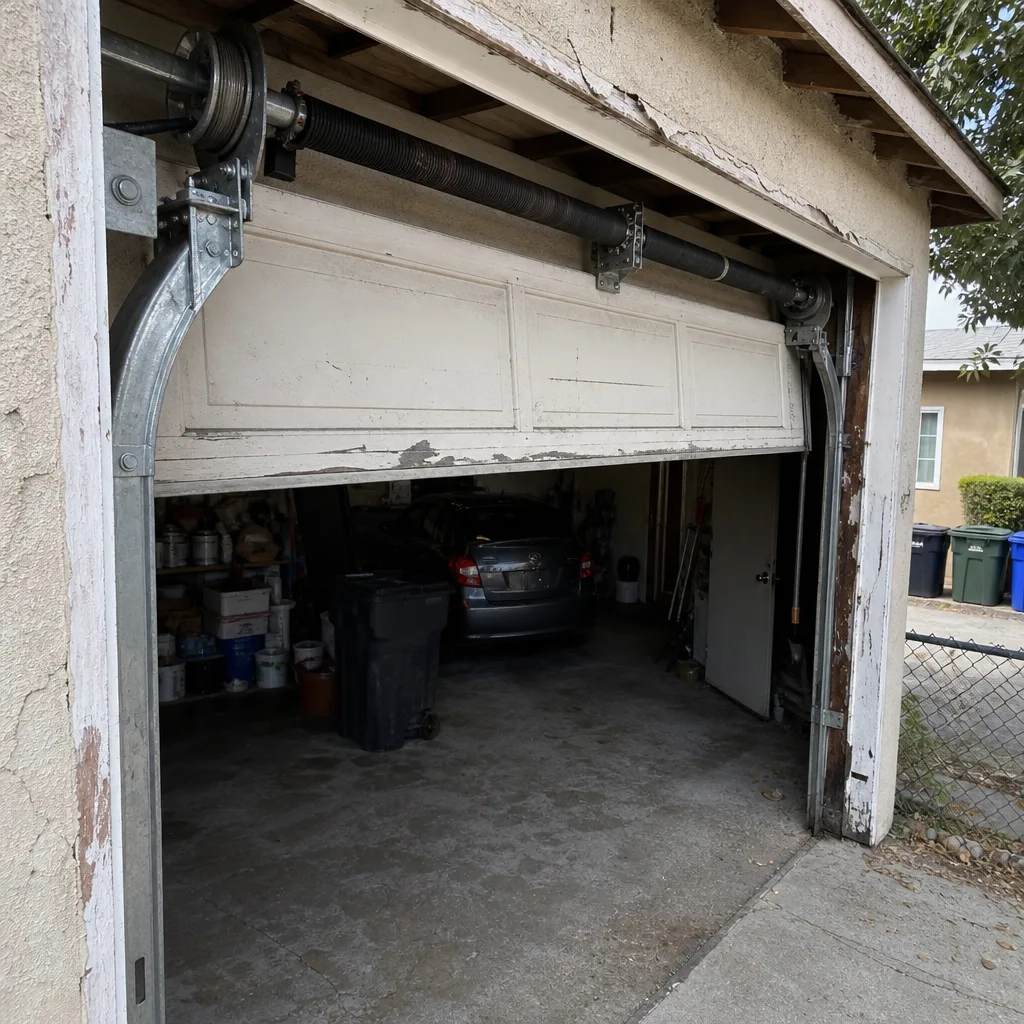 Before
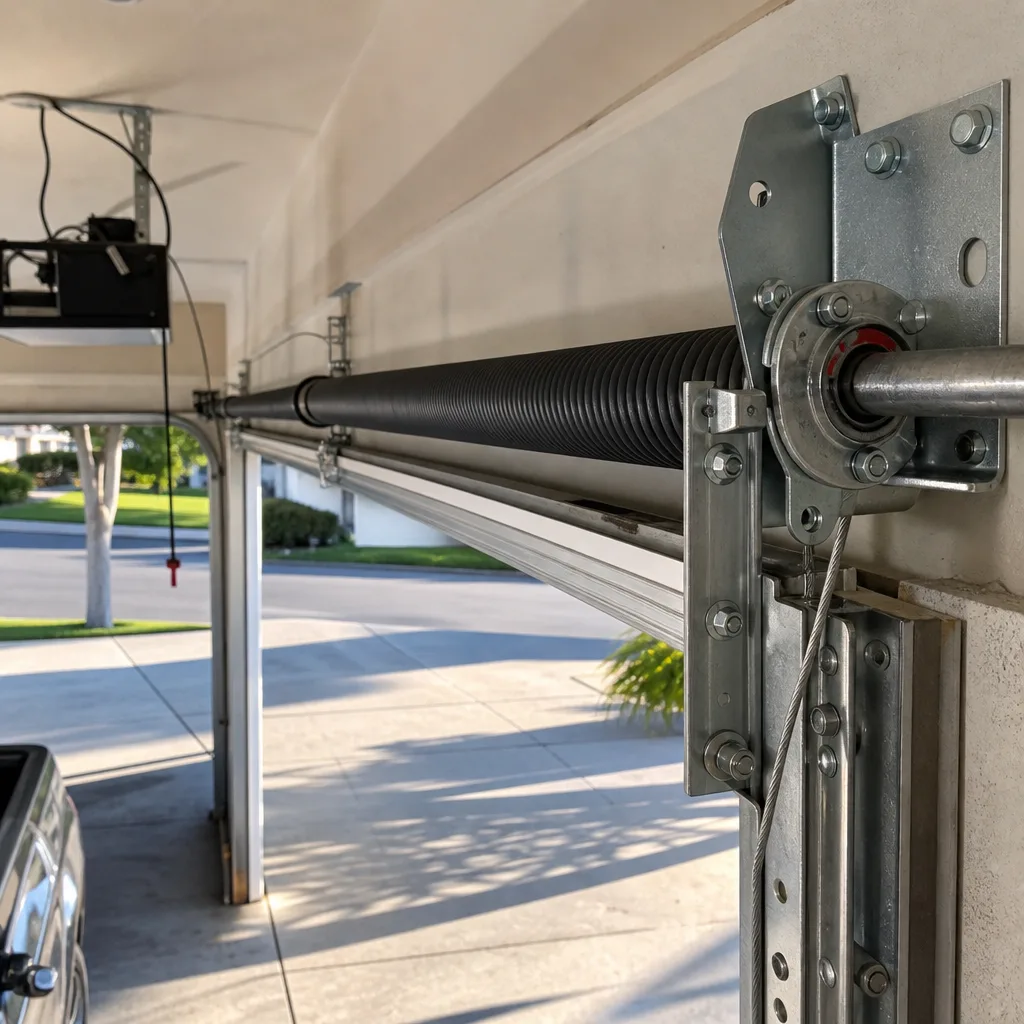 After
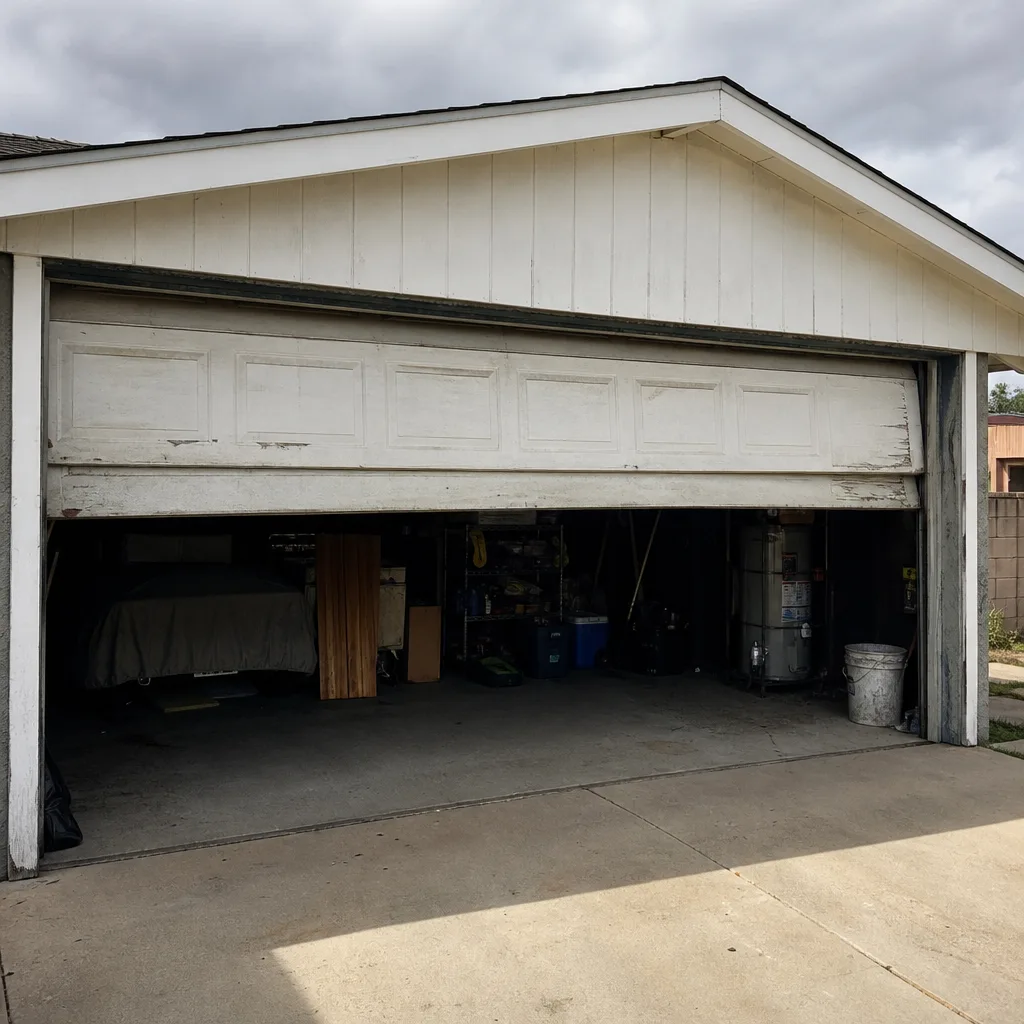 Before
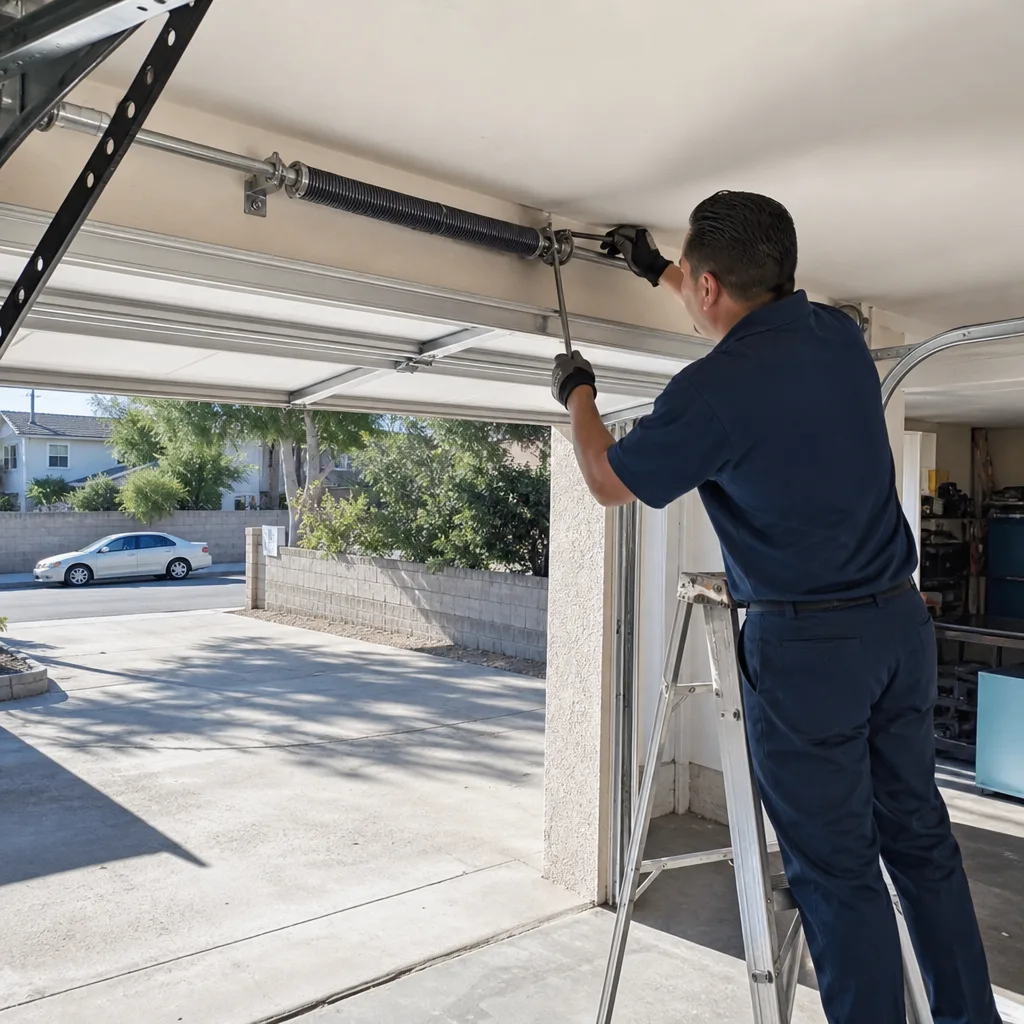 After
When to Call a Professional
Some garage door issues are safe to inspect yourself. A door that reverses immediately, an opener remote that won’t pair, a visible gap in the seal at the bottom of the door, these are observable problems with identifiable causes. But the moment you’re looking at a wound torsion spring, a stretched cable, a bent track, or any component under tension, the DIY phase ends. Torsion springs are under hundreds of pounds of rotational force. A cable under tension can cut through work gloves. These are not beginner repairs, and the hospital bill costs more than the service call. If your door is making a noise it never made before, or the door doesn’t settle evenly in the tracks, or the opener motor runs but the door doesn’t move, call someone who diagnoses garage doors every day. Suncrest Garage Door Repair offers free estimates in Glendale. Call (855) 473-2620 and we’ll tell you what’s wrong, what it costs to fix, and whether replacement actually makes sense.
Frequently Asked Questions
Service call fees in Glendale typically run $50 to $90, which is usually waived when you proceed with the repair. Common repair costs range from $120 to $200 for spring replacement, $150 to $250 for opener gear or logic board work, and $800 to $3,500 for full door replacement depending on material, insulation, and size. The exact figure depends on your door’s weight, spring type, and opener model. Call (855) 473-2620 for a specific quote, estimates are free.
Go to cslb.ca.gov, click “Check a License,” and enter the contractor’s name or license number. Confirm the classification shows C-61/D28 specifically, the status is active, and both bond and workers’ compensation fields are populated. The entire check takes under two minutes and eliminates unlicensed operators immediately.
No, unless you want to replace your current opener with that brand. A contractor who services multiple brands, LiftMaster and Genie and Chamberlain and Craftsman, can diagnose the system you actually have. A single-brand contractor can only sell you their line, which means every repair conversation becomes a sales conversation.
A professional on-site quote is specific and sticks. The price is quoted and agreed before any work starts, and any changes due to newly discovered damage should be explained, justified, and re-approved by you before work continues. If a contractor’s quote shifts significantly after the diagnostic, ask for the specific reason in writing.
Capable contractors stock common spring sizes, rollers, cables, hinges, sensors, and opener components like gear kits and logic boards. What’s on the truck varies by contractor and by the age of your system; legacy brands may require a parts run. Ask directly: “If you find the problem, can you fix it today?” A yes answer with a stocked truck means one visit, not two.
Standard torsion springs rated for 10,000 cycles last roughly 7 to 10 years under normal use, but Glendale’s heat and temperature swings can shorten that range. A 20,000-cycle spring costs more and lasts roughly twice as long. Ask your contractor for the cycle rating, not just the price; a cheap spring is a recurring expense in this climate. Call (855) 473-2620 and we’ll tell you what’s on your door right now and what it should be replaced with.
The Bottom Line
Hiring a garage door contractor in Glendale comes down to four verifications: license, brand coverage, quoting discipline, and written warranty terms. A California C-61/D28 license is the entry requirement. Brand-agnostic coverage, spanning doors and openers across multiple manufacturers, is the technical requirement. An on-site quote with specific spring, door weight, and opener details is the honesty requirement. And a written parts versus labor warranty structure is the protection requirement. Any contractor who passes all four is qualified to work on your system. Any contractor who fails one is either a salesperson or a guesser. One call covers the door, the opener, and the installation. That’s the standard. Whatever brand is on your door, a capable Glendale contractor knows it.
Written by the team at Suncrest Garage Door Repair, serving Glendale since 2014.